Common Health Concerns in Great Danes: What Every Owner Should Know
Common Health Concerns in Great Danes: What Every Owner Should Know
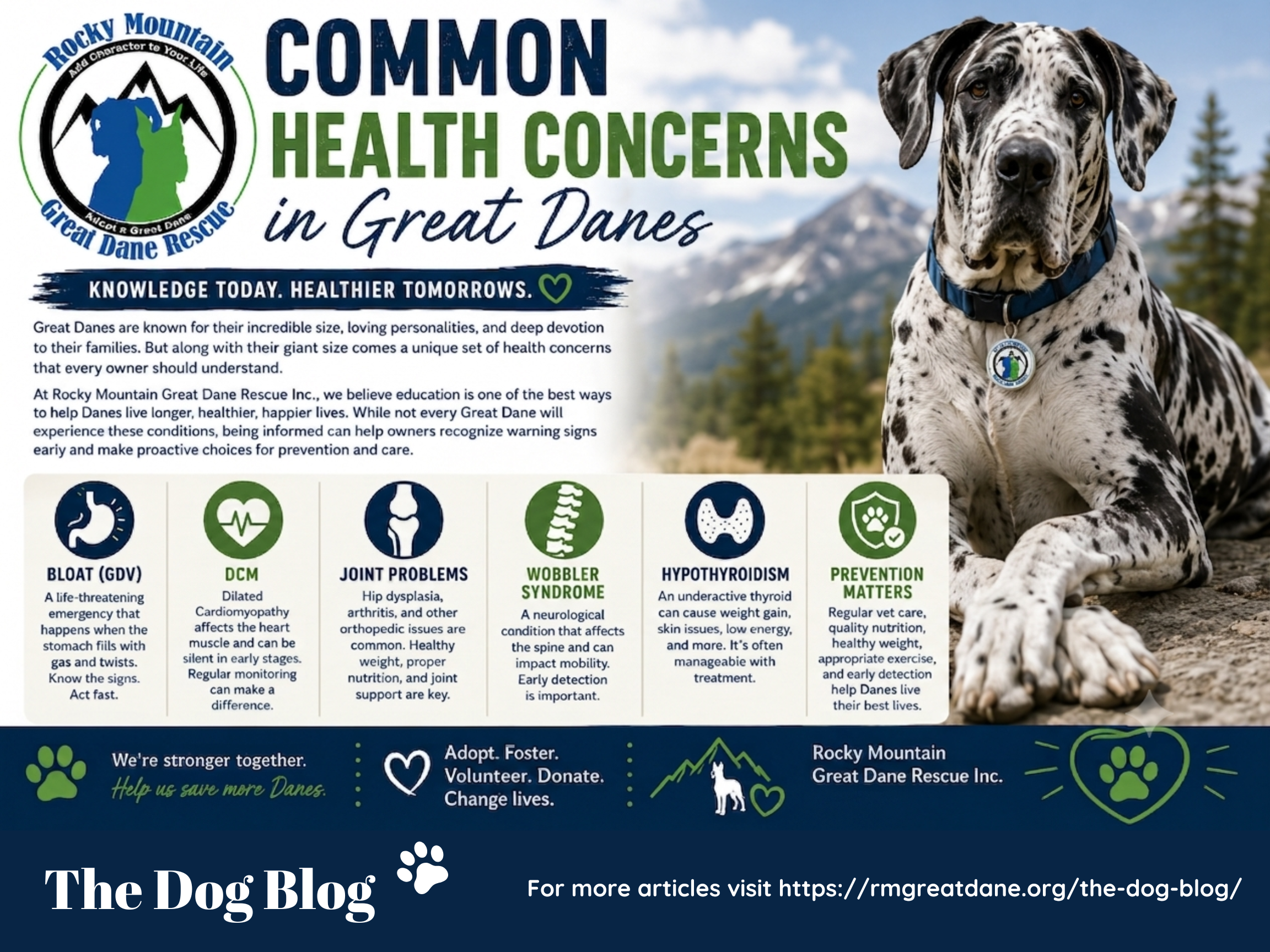
Great Danes are known for their incredible size, loving personalities, and deep devotion to their families. They are goofy, affectionate, emotional, and often convinced they belong in your lap despite weighing over 100 pounds. But along with their giant size comes a unique set of health concerns that every owner should understand.
At Rocky Mountain Great Dane Rescue Inc., we believe education is one of the best ways to help Danes live longer, healthier, happier lives. While not every Great Dane will experience these conditions, being informed can help owners recognize warning signs early and make proactive choices for prevention and care.
Bloat (GDV): The Emergency Every Dane Owner Should Understand
If you spend enough time around Great Dane owners, you will eventually hear the word “bloat.” It is one of the most serious and life-threatening conditions in giant breed dogs.
Bloat, also called Gastric Dilatation-Volvulus (GDV), happens when the stomach fills with gas and twists. Once the stomach twists, blood flow is restricted and the condition becomes rapidly fatal without emergency surgery.
Signs of Bloat Can Include:
➡️ Restlessness or pacing
➡️ Unsuccessful attempts to vomit
➡️ Swollen or tight abdomen
➡️ Excessive drooling
➡️ Rapid breathing
➡️ Signs of pain or distress
➡️ Collapse
Bloat is always a medical emergency.
Ways Owners May Help Reduce Risk:
While there is no guaranteed prevention, veterinarians commonly recommend:
➡️ Feeding multiple smaller meals per day instead of one large meal
➡️ Avoiding intense exercise immediately before and after eating
➡️ Slowing down fast eaters with slow-feed bowls
➡️ Managing stress and anxiety when possible
➡️ Maintaining a healthy body condition
Many Great Dane owners also choose to have a preventative gastropexy (“stomach tack”) performed, often during a spay or neuter procedure. This surgery helps reduce the risk of the stomach twisting.
Dilated Cardiomyopathy (DCM): Heart Health Matters
Great Danes are also predisposed to Dilated Cardiomyopathy (DCM), a disease that affects the heart muscle. In dogs with DCM, the heart becomes enlarged and weaker over time, making it harder to pump blood effectively.
Unfortunately, some dogs show very few symptoms early on.
Possible Signs of DCM:
➡️ Fatigue or reduced stamina
➡️ Coughing
➡️ Rapid breathing
➡️ Weakness
➡️ Fainting episodes
➡️ Difficulty exercising
Routine veterinary care and heart screenings can be incredibly important for giant breeds.
Prevention & Monitoring Tips:
➡️ Annual wellness exams
➡️ Discuss heart screenings with your veterinarian
➡️ Feeding a balanced, high-quality diet and avoid grain-free foods
➡️ Maintain a healthy weight
➡️ Monitor energy levels and breathing changes
Early detection can make a significant difference in treatment options and quality of life.
Joint Problems & Mobility Concerns
Great Danes grow fast - and that giant growth can put stress on developing joints and bones.
Hip dysplasia, arthritis, and other orthopedic concerns are common in the breed, especially as they age.
Common Signs of Joint Issues:
➡️ Stiffness
➡️ Difficulty getting up
➡️ Limping
➡️ Reluctance to jump or use stairs
➡️ Slower movement after exercise
Ways to Support Joint Health:
➡️ Keep puppies at a healthy growth rate
➡️ Avoid excessive high-impact exercise during growth stages
➡️ Feed an appropriate large-breed diet
➡️ Maintain lean body condition
➡️ Use rugs or traction on slippery floors
➡️ Talk with your vet about joint supplements when appropriate
One of the best things owners can do for joint health is keeping their Dane at a healthy weight. Extra pounds put enormous strain on already hard-working joints.
Wobbler Syndrome
Wobbler Syndrome is a neurological condition seen more commonly in giant breeds like Great Danes. It affects the spine and spinal cord, leading to coordination and mobility issues.
Symptoms May Include:
➡️ Wobbly gait
➡️ Weakness in the legs
➡️ Trouble walking
➡️ Neck pain
➡️ Difficulty standing
Some cases can be managed medically while others may require surgery. Early veterinary evaluation is important if symptoms appear.
Hypothyroidism
Great Danes can also develop thyroid issues, particularly hypothyroidism, where the thyroid gland does not produce enough hormones.
Signs Can Include:
➡️ Weight gain
➡️ Low energy
➡️ Skin or coat issues
➡️ Hair loss
➡️ Recurrent infections
The good news is that hypothyroidism is often manageable with medication and regular monitoring.
Prevention Starts With Good Care
While genetics do play a role in many health conditions, proactive care can help support overall wellness and early detection.
Healthy Habits for Great Danes:
➡️ Regular veterinary care
➡️ Quality nutrition
➡️ Healthy weight management
➡️ Appropriate exercise
➡️ Joint support and safe movement
➡️ Routine monitoring for behavior or mobility changes
➡️ Knowing emergency signs and acting quickly
The Goal Is Not Fear - It Is Awareness
Learning about health risks can feel overwhelming, especially for new owners. However, this information isn't meant to scare you - it's meant to help you feel prepared, informed, and confident.
Great Danes may be giant dogs, but they are also deeply sensitive companions who rely on us to advocate for their health and well-being.
At Rocky Mountain Great Dane Rescue Inc., we see firsthand how incredible these dogs are every single day. With responsible care, education, and attentive owners, many Great Danes live joyful, loving lives full of couch snuggles, goofy zoomies, and unforgettable memories.
Because loving a Great Dane means loving them with your whole heart - and doing everything possible to help them stay healthy for as long as we can.